Ellis Krause · 30 October 2026
Academic Institutions Merge Historic Loom Analysis with Digital Platforms for Eco-Conscious Textile Instruction
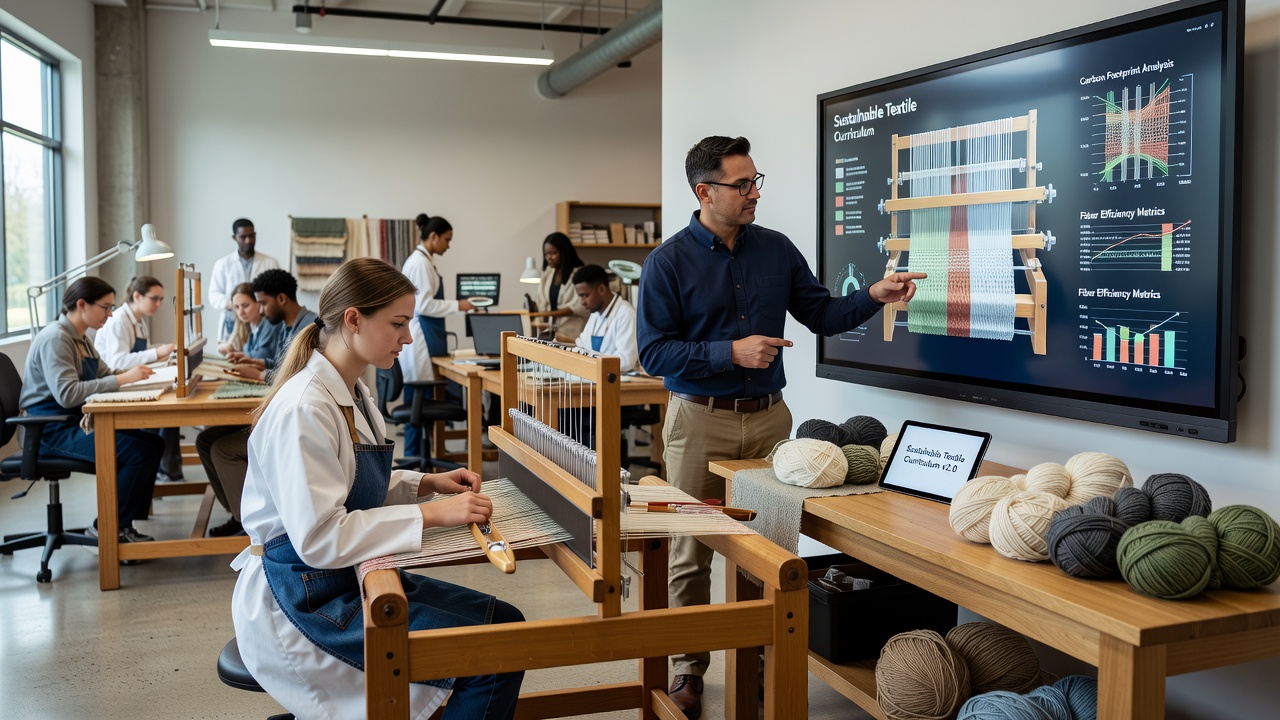
University departments across multiple continents have begun embedding detailed studies of traditional looms into curricula that also feature advanced digital modeling software, and this combination supports training focused on sustainable textile production methods. Programs at institutions in Europe, North America, and Asia introduce learners to preserved wooden and metal looms from the 18th and 19th centuries while teaching them to convert those mechanical principles into parametric algorithms that optimize yarn usage and minimize material waste. Data from textile education reports indicate enrollment in such hybrid courses rose by 28 percent between 2022 and 2025, reflecting broader industry demand for graduates who understand both heritage techniques and contemporary efficiency tools.
Core Components of the Integrated Curriculum
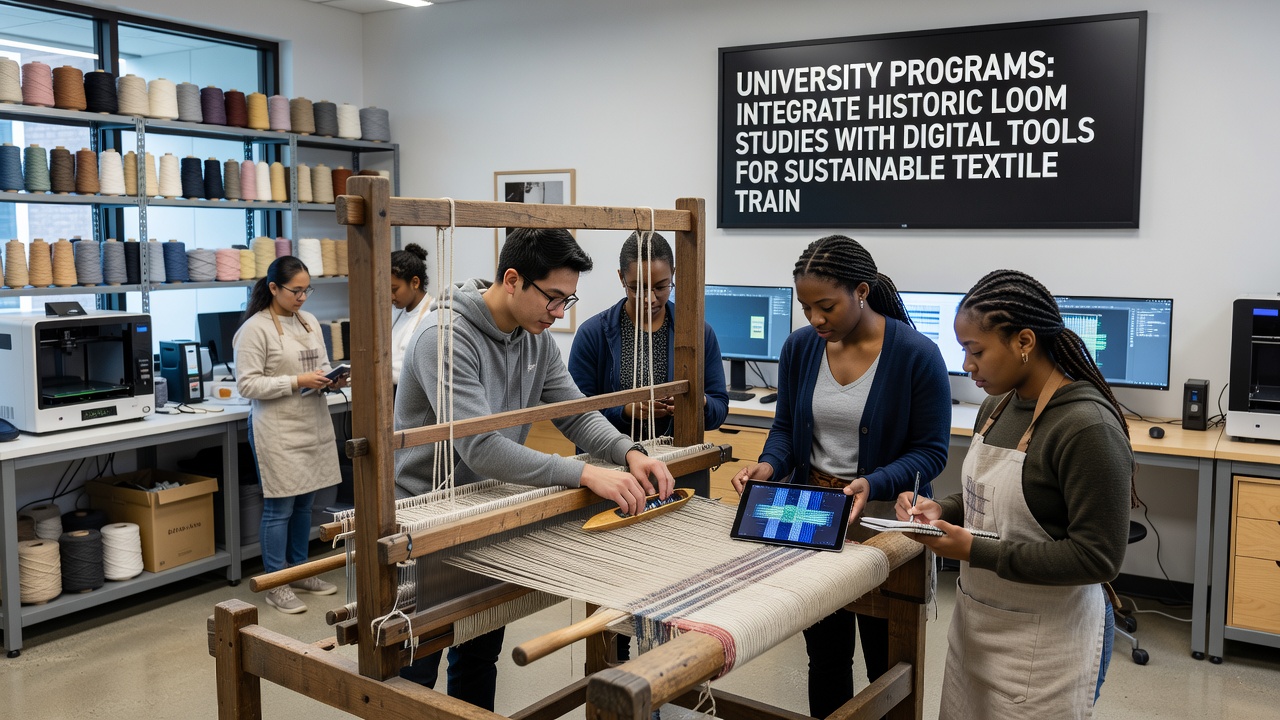
Students first spend several weeks documenting physical loom mechanisms through high-resolution photogrammetry and motion capture, after which they import the resulting datasets into computer-aided design environments. Faculty members guide participants through the creation of digital twins that replicate tension settings and shed formations found on historic frames, yet these simulations allow rapid iteration of weave structures without consuming physical resources. Research from the OECD shows that digital prototyping in textile courses can cut sample production waste by up to 65 percent compared with traditional trial-and-error approaches.
Alongside technical replication, courses examine historical fiber sources and finishing processes that relied on local, low-impact materials, and instructors pair those case studies with modern life-cycle assessment software. Learners therefore evaluate how shifting from synthetic dyes to plant-based alternatives affects both colorfastness and environmental metrics, while the same digital platforms generate compliance reports aligned with emerging global textile regulations.
Regional Program Examples and October 2026 Developments
In Scandinavia, one technical university launched a two-year master’s track in 2024 that requires students to restore a 1790s Swedish loom before modeling its operational parameters in virtual reality environments used by contemporary mills. Observers note that graduates from this track have secured positions at mills seeking to reduce energy consumption during warping and weaving stages. Across the Pacific, an Australian institution introduced a certificate module in early 2025 that combines archival loom records with machine-learning tools capable of predicting fabric drape and tensile strength from digital weave files.
October 2026 marks the scheduled rollout of a collaborative workshop series hosted by three North American universities, where participants will test an open-source platform that translates scanned loom cam profiles into machine-knitting instructions compatible with circular and flat-bed equipment. The initiative draws on funding from national research councils and aims to standardize data formats so that smaller heritage organizations can contribute their loom documentation to shared repositories.
Industry Partnerships and Measurable Outcomes
Textile manufacturers have supplied decommissioned looms to participating departments, and in return they receive access to student-generated digital archives that document restoration steps and operational adjustments. One European mill reported a 22 percent reduction in setup time after adopting simulation files created by students who had studied its own 19th-century equipment. Additional collaborations involve software companies that donate licenses for pattern-optimization tools, allowing programs to track metrics such as yarn utilization rates and water consumption estimates within each design iteration.
Accreditation bodies have begun recognizing these hybrid programs under updated sustainability standards, and several institutions now list the courses as prerequisites for advanced degrees in materials engineering. Figures released by academic consortia reveal that alumni from the first cohorts have contributed to 14 peer-reviewed papers on digital preservation of textile heritage, while also filing patents for loom-interface adaptations that improve energy efficiency in small-batch production.
Future Trajectory and Resource Sharing
Departments continue to expand open-access repositories that host both 3D models of historic looms and annotated datasets on sustainable fiber performance, and these collections support remote workshops for practitioners located far from physical archives. International exchange agreements allow students to compare loom variants from different regions within the same digital environment, highlighting how minor mechanical differences influence fabric characteristics and resource demands. As more universities adopt similar frameworks, the volume of standardized digital loom documentation is projected to double by 2028, according to internal forecasts from participating research networks.
Conclusion
University programs that combine historic loom studies with digital tools are producing graduates equipped to advance sustainable textile practices while preserving mechanical knowledge from earlier eras. The structured integration of physical documentation, simulation software, and environmental assessment creates measurable efficiencies in training and production, and ongoing expansions scheduled for October 2026 indicate continued institutional commitment to this approach.