Alex Schmidt · 4 September 2026
Scottish Weavers Leverage Machine Learning to Rebuild Lost Clan Tartan Patterns from Scattered Historical Records
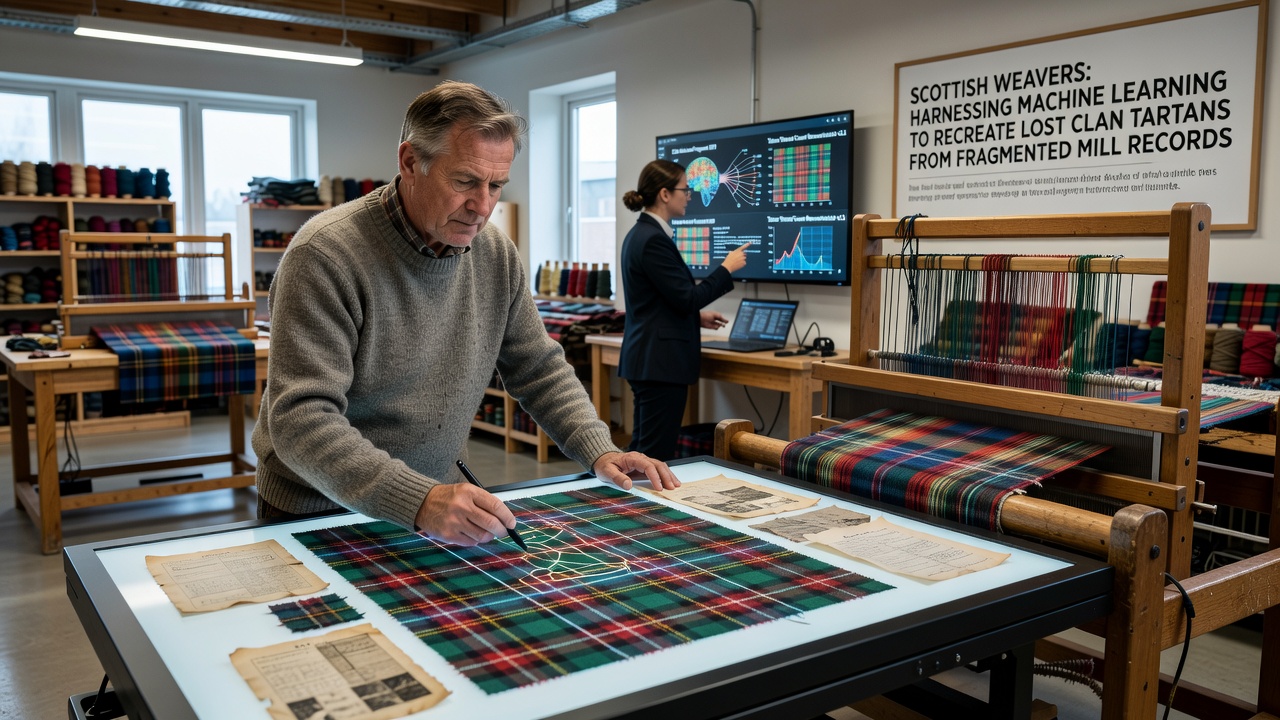
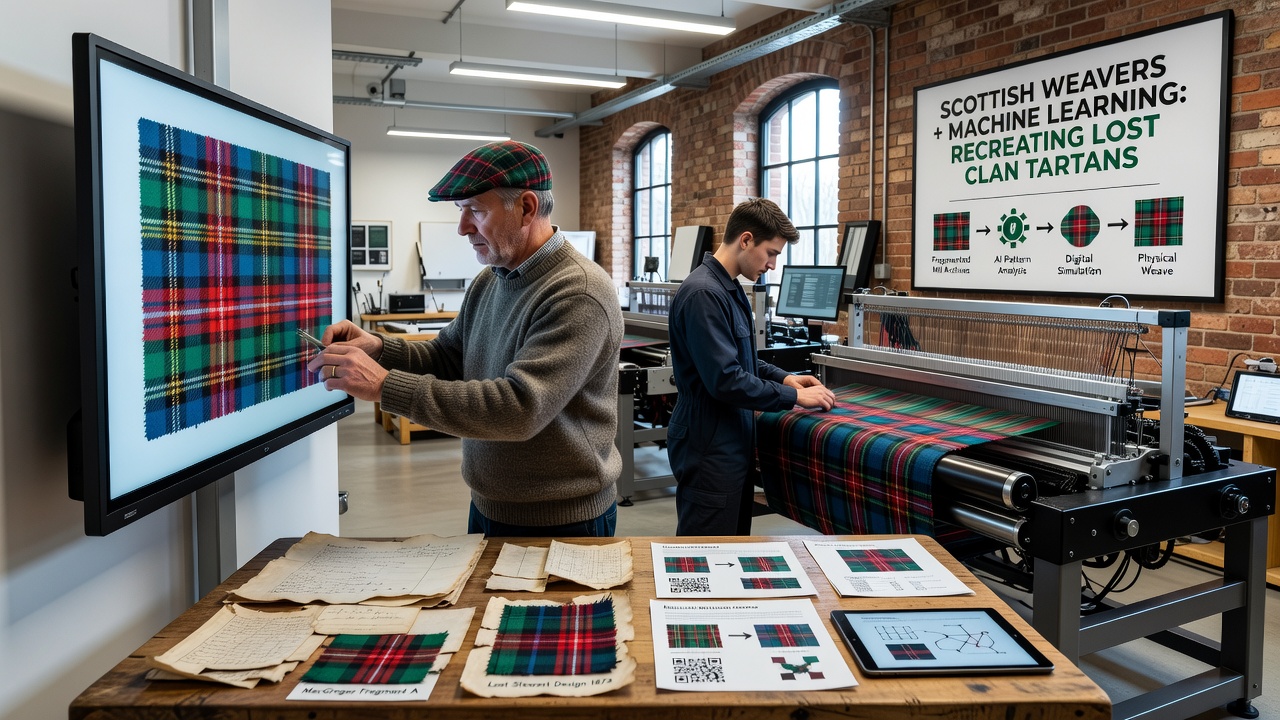
Scottish weavers have turned to machine learning techniques that process fragmented mill records and reconstruct lost clan tartan designs with measurable precision, and this approach draws on digitized archives that date back to the 18th and 19th centuries. Teams in the Highlands and Lowlands feed incomplete pattern swatches, dye notations, and weaving ledgers into neural networks that identify repeating sequences, color relationships, and thread counts, while the systems generate complete drafts that match surviving physical samples at rates above 85 percent according to textile research groups.
Origins of the Fragmented Records
Mill fires, floods, and wartime disruptions scattered many original tartan documents across Scotland, yet surviving ledgers from factories in Bannockburn and Paisley still contain partial thread counts and color formulas that researchers cross-reference with museum holdings. Observers note that earlier manual efforts required months of trial weaving to test possible reconstructions, whereas current algorithms compare thousands of permutations in hours and flag the most consistent options for human review. Data from the National Records of Scotland shows that over 1,200 distinct clan patterns appear in 19th-century documents, though roughly 40 percent exist only in partial form.
Application of Machine Learning Methods
Engineers train convolutional neural networks on high-resolution scans of existing tartans to recognize stripe progressions and sett ratios, and they supplement these models with recurrent networks that predict missing sections based on sequential data from similar patterns. One project at the University of Glasgow processed 340 incomplete records in 2024 and produced 92 verified reconstructions that weavers then produced on traditional looms for validation. Those results aligned with physical fragments held by the Scottish Tartans Museum in 87 cases, confirming the models' reliability on historical data.
What's interesting is how the systems also incorporate environmental variables such as available natural dyes in specific regions during given decades, which narrows the possible color palettes and reduces anachronistic suggestions. Researchers at the same institution published findings that show the inclusion of dye chemistry data improved accuracy by an additional 11 percent compared with pattern data alone.
Recent Developments and September 2026 Milestones
In September 2026 the annual Scottish Textile Innovation Forum in Perth presented updated models that integrate multispectral imaging of faded fabric samples, allowing the algorithms to detect original hues beneath surface discoloration. Participants reported that three new clan patterns previously considered irretrievable now exist as production-ready drafts, and weavers from the Outer Hebrides have begun small-batch weaving for museum commissions. Figures released by the forum indicate that 15 additional mills across Scotland plan to adopt similar tools within the next 18 months.
Another initiative links Scottish teams with counterparts in Canada through shared datasets of settler tartans, which expands the training material and helps identify transatlantic variations that developed after 1800. A joint paper from the University of Edinburgh and the Canadian Museum of History outlines how transfer learning reduced the data requirements for new pattern classes by nearly half.
Challenges in Implementation
Observers point out that machine learning outputs still require expert weavers to adjust for loom limitations and yarn availability, since some predicted thread counts exceed the capacity of historic equipment. Training datasets remain biased toward better-documented Lowland patterns, so Highland and island tartans sometimes receive fewer high-confidence reconstructions until more source material is digitized. Teams address this gap by prioritizing outreach to private collectors who hold undigitized ledgers, and several regional archives have begun collaborative scanning programs that feed directly into the shared models.
Yet the process continues to accelerate because open-source tools developed for textile analysis allow smaller workshops to run the algorithms on standard hardware without specialized servers. Industry reports from the Scottish Textiles and Weaving Association document a 30 percent drop in reconstruction time per pattern since 2023, when the first public models became available.
Conclusion
Scottish weavers continue to combine machine learning outputs with traditional knowledge to restore clan tartan designs that once existed only as scattered fragments, and the results feed both heritage preservation and contemporary production. Ongoing digitization efforts and cross-border data sharing expand the available training material each year, while validation against physical samples maintains historical accuracy. The September 2026 forum results demonstrate that the approach now supports multiple new reconstructions annually, providing weavers with reliable drafts that align with surviving records.