Katja Washington · 18 September 2026
Village-Led Initiatives Breathe New Life into Forgotten British Weaving Traditions
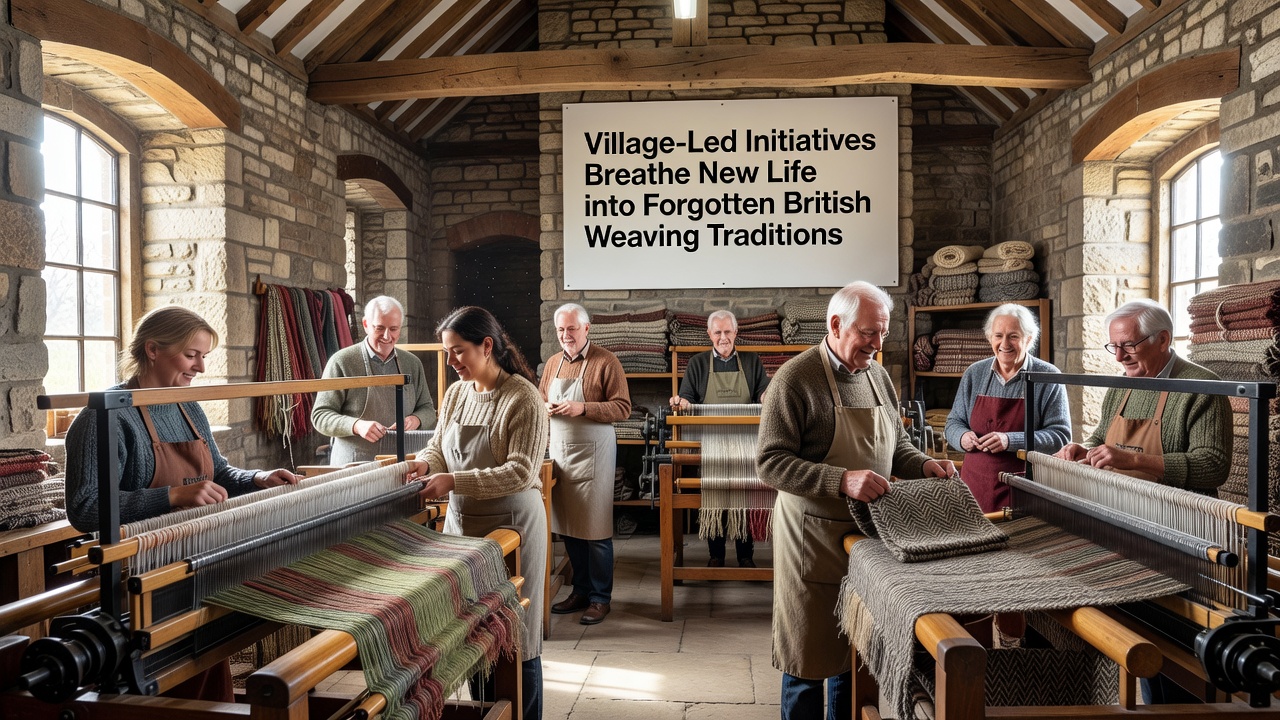
Communities in scattered British villages have started restoring weaving practices that nearly disappeared after the rise of mechanized textile production in the nineteenth century, and these efforts draw on local archives, oral histories, and hands-on teaching sessions that pass skills between generations. Data from regional heritage surveys shows participation in village weaving groups has increased steadily since the early 2010s, with new collectives forming in areas once known for linen, silk, and specialized wool fabrics.
Historical Patterns That Faded and Returned
Many rural districts once supported small-scale weaving operations that supplied nearby markets and households with durable cloth, yet competition from factories led to workshop closures and the loss of specialized techniques such as drawloom patterning and natural dye extraction. Records kept by local historical societies indicate that certain villages retained fragments of these methods through family collections of pattern books and sample swatches, and those materials now serve as starting points for revival projects. Observers note that the shift away from industrial dominance created space for residents to experiment again with older equipment stored in barns and community halls.
Current Village Projects Across Regions
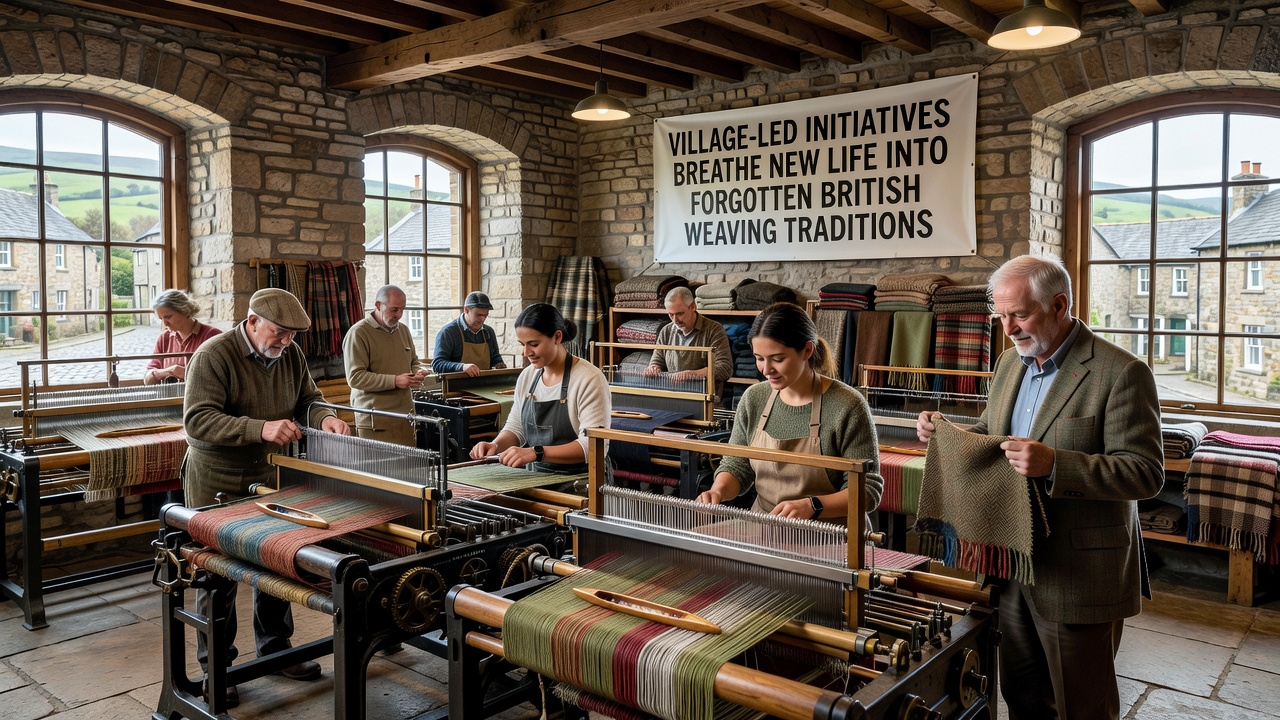
In the Welsh borders, groups have reconstructed linen weaving sequences using flax grown on nearby plots, while in parts of the Midlands former silk ribbon makers have reintroduced hand-thrown shuttles and tensioning systems documented in nineteenth-century ledgers. Similar work in northern England focuses on recovering forgotten blanket weaves that relied on local sheep breeds, and each project coordinates through village halls that host weekly instruction and equipment sharing. Research compiled by regional textile archives reveals that these initiatives often begin with one or two enthusiasts who locate surviving looms, then expand as neighbors contribute time and materials.
Training sessions emphasize accurate reproduction of historical structures rather than modern adaptations, and participants record their progress in shared digital repositories that allow cross-village comparison. Figures released by craft education programs show that several hundred people have completed introductory courses in the past five years, with many continuing to produce exhibition pieces for local museums.
September 2026 Festival Plans
Organizers have scheduled a coordinated series of demonstrations and workshops for September 2026 that will link multiple village sites through a traveling exhibition of finished textiles and live demonstrations. The program includes sessions on natural mordants, pattern drafting from original manuscripts, and maintenance of wooden looms, and advance registrations indicate strong interest from both residents and visitors. Coordination between sites relies on a central online calendar maintained by a volunteer network that updates details on transport and accommodation.
Support Networks and Resource Sharing
Villages have formed informal exchanges that circulate spare parts for antique looms and batches of naturally dyed yarn, reducing costs for individual participants while maintaining consistency across projects. Local businesses sometimes contribute space for storage or host pop-up markets where finished cloth reaches buyers directly. A report issued by the Heritage Crafts Association documents how these arrangements have helped sustain momentum even when grant funding fluctuates. And external partnerships with academic departments have supplied technical analysis of fiber samples that guides accurate replication.
Measured Outcomes in Communities
Surveys conducted by county heritage offices record new employment in small-batch production and related tourism services, with some villages reporting modest increases in footfall during open-studio events. Cultural benefits appear in the form of restored communal spaces that now function as both workshops and meeting places, strengthening social ties among residents who previously had limited shared activities. Data collected through participant questionnaires shows improved confidence in manual skills and greater awareness of regional textile history among younger residents who join the groups.
One village in the southwest has documented its progress through a public timeline that lists every completed length of cloth and the names of those who contributed, creating a record that other communities consult when planning their own steps. These archives also serve educational purposes when schools arrange visits to observe demonstrations.
Conclusion
Village-led weaving revivals continue to expand through incremental additions of skills, equipment, and participants, and the planned activities for September 2026 represent one visible milestone in an ongoing process. Evidence from multiple regions indicates that the combination of preserved artifacts, community instruction, and resource networks has produced measurable continuity in techniques once considered lost. Further growth will depend on sustained local involvement and access to the historical sources that anchor each project.